Mercedes Signs Wayve as a Third Self-Driving Supplier
Hardware / analysis
Mercedes Signs Wayve as a Third Self-Driving Supplier
The automaker already runs Nvidia's Alpamayo in the CLA and its own Drive Pilot on highways, and Wayve's map-free system becomes a third bet inside two years, without either company naming an automation level yet.
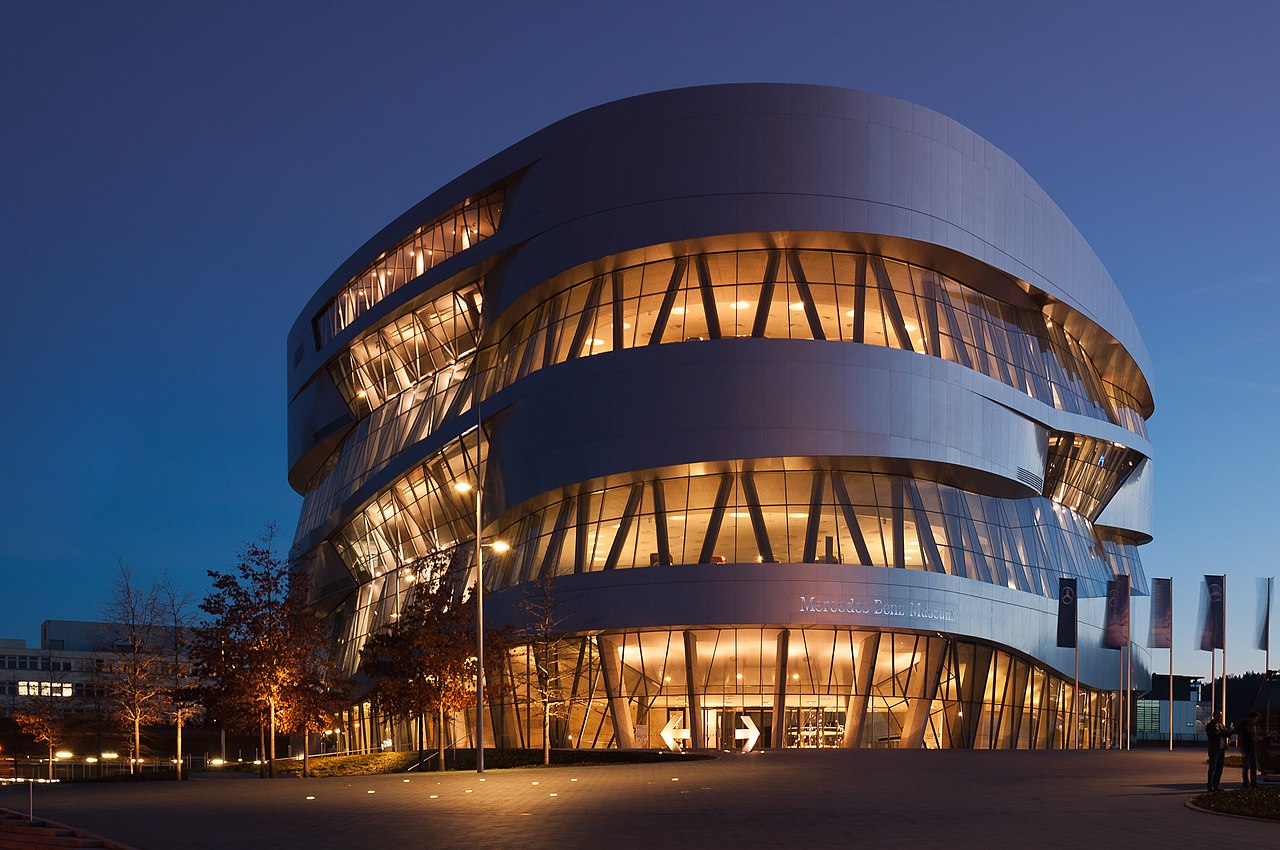
Mercedes-Benz signed a definitive production agreement to integrate Wayve's AI Driver into future vehicles starting within two years, the companies said Sept. 22. The deal covers what both companies call advanced urban and highway point-to-point driving assistance, and it is the first time Wayve's system has been built into a premium-segment production car, according to Jörg Burzer, Mercedes-Benz's chief technology officer.
What Mercedes actually signed
Burzer called it "the world's first integration of the Wayve AI Driver in the premium segment." Wayve co-founder and chief executive Alex Kendall said the agreement reflects "a deep technical alignment between our teams," built on a multi-year technical partnership that preceded this week's production commitment. Neither company named a specific Mercedes model, a target SAE automation level, or a firm calendar date beyond "within two years." Wayve's system is built to work without HD maps or geofenced test regions, generalizing to cities it has not specifically been trained on, and it will run inside Mercedes' MB.OS software platform rather than as a bolted-on module.
The stack Wayve is joining, not starting
The number that matters here is not that Mercedes picked Wayve, it is that Wayve is the third distinct driving stack Mercedes will be running, not the first. Mercedes already ships Nvidia's Alpamayo, a Level 2-plus assistance system, in the CLA as of the first quarter of 2026, and separately sells Drive Pilot, its own Level 3 hands-off, eyes-off system for highway traffic jams. Three stacks from three different technical lineages inside one lineup is not how a company behaves when it has settled on an architecture; it is how a company behaves when it thinks the architecture question is still open, the same uncertainty visible in how autonomous systems in other domains are still closing the gap to human performance one narrow benchmark at a time rather than in one clean jump. The cost of being wrong on architecture is higher than the cost of running three procurement relationships at once.
That reasoning chain has a floor under it: Mercedes already put money behind this specific bet before signing today's deal. Mercedes was a named investor in Wayve's $1.5 billion Series D, announced Feb. 25, 2026 at an $8.6 billion valuation, alongside Nissan, Stellantis, Microsoft, Nvidia and Uber. Nissan and Stellantis backed the same round without yet announcing a production deal of their own, which makes Mercedes the first of Wayve's automaker investors to convert equity into an actual vehicle commitment. That sequencing, investment first and a signed production agreement seven months later, is the pattern automakers have settled on for buying into unproven autonomy suppliers: take a board seat and a data-sharing arrangement before committing to put the software in a car a customer can buy, so the decision to actually ship can be made with a year of the supplier's progress to look at rather than a pitch deck.
| Mercedes driving stack | Supplier | Status |
|---|---|---|
| Alpamayo | Nvidia | Shipping in the CLA since Q1 2026 |
| Drive Pilot | Mercedes-Benz | Level 3, sold for highway traffic jams |
| AI Driver | Wayve | Production agreement signed Sept. 22, 2026 |
The infrastructure underneath the software
Wayve trains its models on Nvidia infrastructure hosted on Microsoft Azure, according to Wayve's own account of the deal, which means two of Wayve's Series D investors are also the vendors its entire training pipeline runs on. That is not unusual in AI infrastructure right now, but it does mean Mercedes is buying into a supply chain it does not control at any layer: the training compute is Nvidia's, the cloud is Microsoft's, and the driving software is Wayve's, with Mercedes providing the vehicle and the MB.OS integration. If Nvidia's chip allocations or Azure's capacity tighten, the same constraint already showing up in AI datacenter financing, Wayve's training cadence is exposed before Mercedes' badge on the windshield is.
Wayve is separately running driverless commercial trials with Uber, which launched autonomous rides in London on Sept. 3, 2026, and Wayve says its goal is supervised autonomy in consumer vehicles from 2027 across more than 10 global markets. The Mercedes deal sits inside that broader rollout rather than as a one-off automaker partnership, which is part of why Mercedes is willing to be the first premium brand to commit: Wayve's software is already accumulating real-world miles through the Uber trials, data Mercedes benefits from without running its own fleet to generate it.
What would change this read
The gap in this week's announcement is the one that would resolve whether this is a genuine architecture bet or a hedge Mercedes can quietly shelve. Neither company said what SAE level the AI Driver will ship at, which determines whether it competes directly with Drive Pilot or sits a tier below it, nor named the first model it lands in. A Mercedes-Benz spokesperson did not specify a production timeline more precise than "within two years" in the material the companies published. Until Mercedes names a model, a level and a date, the honest description of this deal is a well-capitalized company buying itself another few years to decide which of its three driving stacks it actually wants to sell at scale. Running three costs money in engineering headcount, validation testing and regulatory filings duplicated three times over, and Mercedes has not said when it expects to retire any of the three rather than keep adding to the list.
Sources
More in Hardware
- 01Washington Finds Robot Imports a Security Threat and Sets No Tariff, Date or Product ListThe October 28 Section 232 proclamation orders negotiations rather than duties, so the cost of the finding sits in components nobody has priced yet.
- 02Electric Trucks Hit 50.3% of China Heavy-Truck Sales in September, in a Market Down 21%September sits below the December 2025 peak of 53.9%, and electric sales grew 37% while total sales fell, and the 2026 year-to-date figure is 38.1%.
- 03Ola Electric Registered 12,096 Scooters in October, Down 10%, as India Added 7% to 223,847Entrackr and Autocar Professional use different Vahan pulls for September, which moves the growth figure from 7.3% to about 10%.
- 04Battery Self-Tests Cause a One-Minute Dip in Grid Frequency, and Jülich Measured It on a 1.5 MW UnitA Forschungszentrum Jülich team traced a worldwide 60-second ripple in grid frequency to battery power supplies that all test themselves at the top of the minute. The preprint measured one site; the scale claims come from a press release.