AWS Puts Graviton5 Behind Lambda's Managed Instances
Hardware / analysis
AWS Puts Graviton5 Behind Lambda's Managed Instances
Nine months after previewing the chip, AWS still frames every Graviton5 performance number as its own calculation, not an independently reproduced one.

Amazon Web Services said Sept. 9 that Lambda Managed Instances now supports its Graviton5 processor, the fourth distinct Amazon EC2 product line to carry the chip since AWS previewed it at re:Invent in December 2025.
The update adds four instance types, C9g, C9gd, M9g and M9gd, to Lambda Managed Instances, a capability AWS launched in November 2025 that runs a function on dedicated EC2 capacity instead of Lambda's shared execution pool. A developer picks the instance type when creating a capacity provider, or lets Lambda choose automatically based on memory size and vCPU ratio. The Sept. 9 post repeats the same figure AWS used when Graviton5 reached general availability three months earlier: up to 25 percent better compute performance than Graviton4.
What changed with Graviton5 on Lambda Managed Instances
Graviton5 packs up to 192 Arm cores per chip, built across four chiplets on a 3-nanometer process, according to AWS's June 10 general-availability post. Cache grew five times larger than Graviton4's, and DDR5-8800 memory ships with it, which AWS calls the fastest memory attached to any cloud instance. A new component called the Nitro Isolation Engine formally verifies isolation between virtual machines sharing a host, which AWS describes as the first formally verified hypervisor running in a major public cloud.
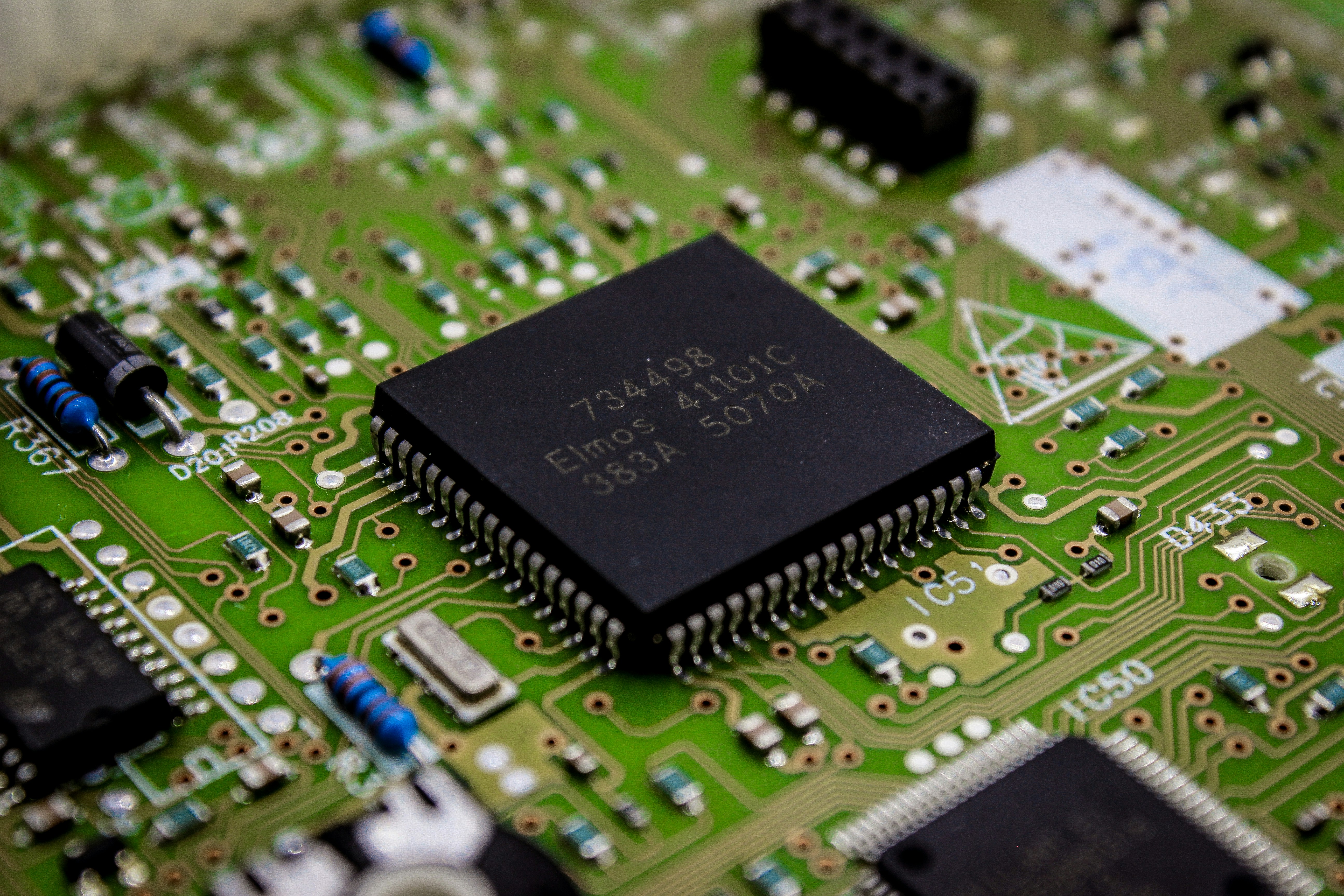
None of the performance numbers attached to that hardware are independently measured. AWS's own launch post supplies the workload breakdowns: up to 35 percent faster web applications, 35 percent faster machine learning inference, and 30 percent faster databases, each against Graviton4 and each without a stated batch size, dataset or software version. ClickHouse reported a 36 percent throughput gain "with zero code changes," and HubSpot said MySQL query duration fell by up to 60 percent, but both figures appear only in AWS's own blog post rather than in a benchmark either company published under its own name.
Nine percent more expensive, 15 percent more efficient
The number that matters more than any of those didn't come from AWS at all. M9g instances are priced 9.0 percent above the equivalent M8g Graviton4 instance, uniformly across every size, according to Classmethod's DevelopersIO, a Tokyo-based AWS consultancy that checked list pricing the day after general availability. Divide the vendor's 25 percent compute claim by that 9 percent price increase and the implied gain in performance per dollar comes to roughly 15 percent, a figure AWS has not stated in any of its own posts. Classmethod's inspection of a running instance also found the core clock rose from 2.8 GHz to 3.3 GHz and the per-instance L3 allocation from 36 MiB to 48 MiB, both measurements taken directly rather than lifted from a press release.
- Compute performance25 %
- On-demand price9 %
- Implied performance per dollar15 %
Source: AWS EC2 M9g general-availability post (June 10, 2026) and Classmethod DevelopersIO price analysis (June 11, 2026)
Where the chip actually runs
Graviton5 reached general availability in stages, not all at once. M9g and M9gd shipped June 10; the compute-optimized C9g and C9gd followed July 1; the memory-optimized R9g and R9gd came Sept. 1, eight days before Lambda Managed Instances got its turn. Every one of those general-availability posts named the same four regions: US East (N. Virginia), US East (Ohio), US West (Oregon) and Europe (Frankfurt). AWS did not say when, or whether, Graviton5 will reach standard Lambda functions that skip Managed Instances entirely, or when it will reach a fifth region.
| Instance family | Role | GA date |
|---|---|---|
| M9g / M9gd | General purpose | June 10, 2026 |
| C9g / C9gd | Compute-optimized | July 1, 2026 |
| R9g / R9gd | Memory-optimized | Sept. 1, 2026 |
| Lambda Managed Instances | Serverless, via the four families above | Sept. 9, 2026 |
AWS has leaned on hardware and infrastructure changes elsewhere on its platform this month, too. A NVMe caching change on SageMaker HyperPod cut LLM cold starts by about 60 percent without any new silicon at all. Cloud rivals are making comparable bets on capacity. Oracle, for instance, tripled its GPU deliveries to 300,000 units against a backlog nearly seven times its full-year capital spending.
The adoption number with no denominator
Nafea Bshara, an AWS vice president and co-founder of its Annapurna Labs chip division, told the re:Invent 2025 audience that more than half of new CPU workloads started on AWS over the prior two years ran on some generation of Graviton, according to Runtime. It is a genuinely large adoption figure from a named executive, and it is also unfalsifiable as stated. AWS did not define what counts as a new workload, did not say whether the count runs by instance-hour, by account or by deployment, and has not published it as a metric with a consistent methodology from one keynote to the next.
What would change this read is a customer benchmark run outside AWS's own launch materials, on a stated dataset, with Graviton4 and Graviton5 priced at the instance sizes a real deployment would actually use, rather than the compute claim divided by the list-price delta. Until one exists, 15 percent is a calculation, not a measurement.
Sources
More in Hardware
- 01Waymo Targets Singapore for 2028, Two Rivals Already Carry RidersWeRide and Pony AI have carried invited and paying riders through Singapore's Punggol district since April, roughly two years before Waymo's own timeline puts a rider in one of its cars there.
- 02Royal Enfield Prices Flying Flea at €5,990 Abroad, ₹2.79 Lakh at HomeNew Atlas pegs the electric motorcycle's April price in India at roughly $3,000 by direct conversion, and Royal Enfield has already lived through the same gap once with a gasoline model.
- 03Nvidia Won't Call Its Working Rust GPU Track Production-Readycutile-rs already backs an open-source LLM server and a Hugging Face testbed, but Nvidia's Sept. 8 announcement stops short of endorsing either new track for production.
- 04Arm Reuses the Total Design Name for Robots, Not Yet the SiliconThe original Total Design already has a customer-ready chiplet on TSMC's N2 process; the physical AI version Arm announced Sept. 8 is a set of robot-capability definitions.