Snapdragon X2 Linux Support Targets November, Not Today
Hardware / analysis
Snapdragon X2 Linux Support Targets November, Not Today
Qualcomm's Sept. 23 preview boots Debian 13 on Snapdragon X2 laptops, but its own roadmap leaves the middle stage undated and pushes Ubuntu certification to 2027.
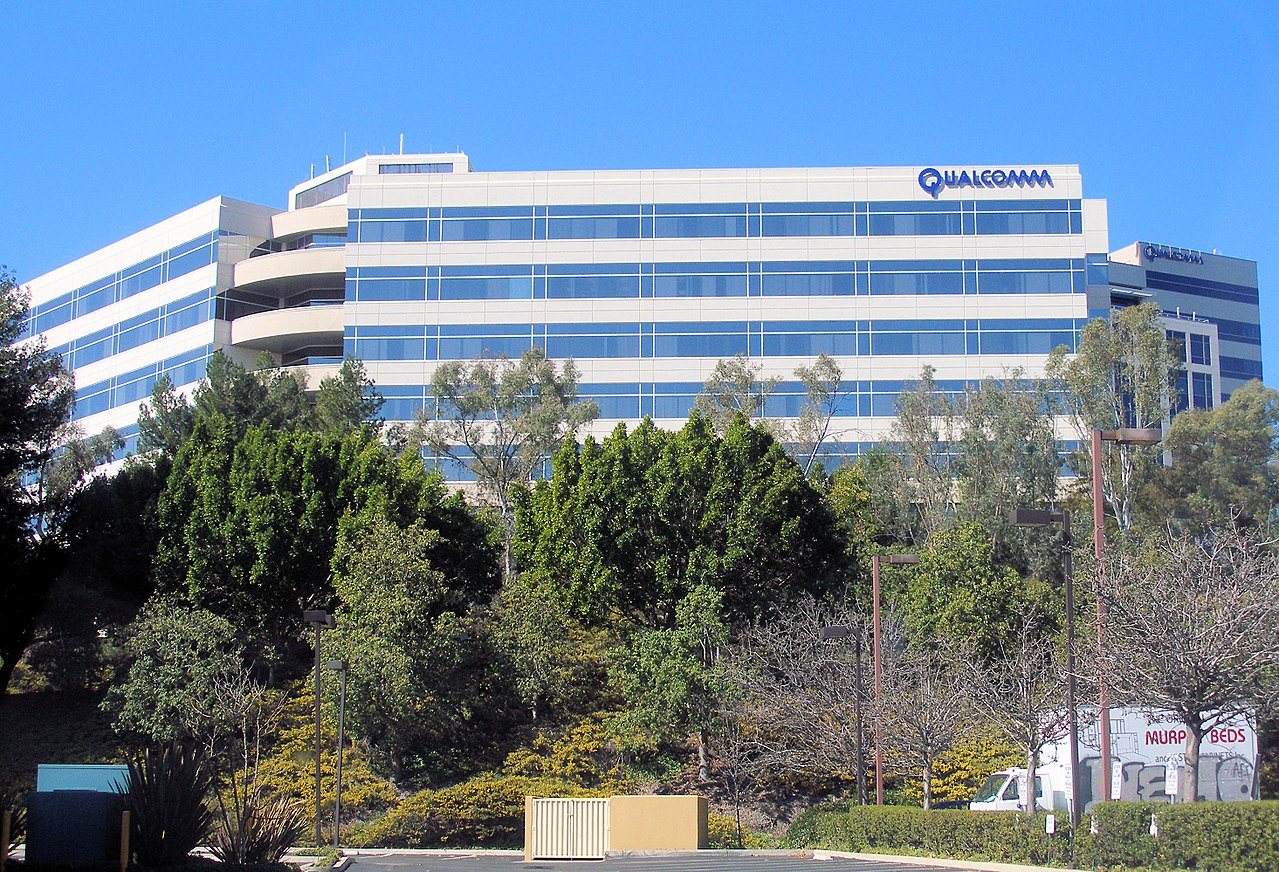
Qualcomm published an "Early Developer Preview" for Linux on the Snapdragon X2 Series on Sept. 23, and the headline claim, that Linux now runs on the chip, is true and also not the number that matters. The number that matters is the one Qualcomm did not attach a date to: the middle of the three rollout stages its own roadmap describes.
The developer blog post is co-written by Nagaraju Naik, senior director of product management at Qualcomm Technologies, and Ramya Kanthi Polisetti, an applications engineer with the Qualcomm Developer Network. Their reference environment pairs a Debian 13 ("Trixie") userspace with a custom-built kernel. It boots through systemd-boot, connects USB and PCIe peripherals, and talks to Qualcomm's universal peripheral serial engine over UART, I2C and SPI. Graphics run through the open-source Freedreno, Turnip and Rusticl Mesa drivers for the Adreno GPU, and the Hexagon NPU is reachable through the fastRPC driver for on-device inference.
What boots, and what the preview doesn't cover
Every verb in that list, boots, connects, talks, runs, reaches, describes a driver landing upstream, not a finished desktop. The preview is scoped to Snapdragon X2 Series laptops. Qualcomm's post says explicitly that it does not cover desktop form factors, earlier Snapdragon X platforms, or other development boards, and that readiness "varies by OEM design and Snapdragon X2 Series variant." That scoping matters more than it sounds: Qualcomm has spent 2026 pushing Snapdragon silicon into robotics boards too, including keeping the license open on PickNik's MoveIt after buying the company, and none of that work is what this preview addresses.
Three stages, and only one has a date
Qualcomm names the stages Initial Enablement, Expanded Enablement and Production Readiness. Initial Enablement is what shipped Sept. 23: the boot and I/O list above. Expanded Enablement is described as closing "the gap between what works and what's upstream" and bringing broader hardware coverage, with no date attached anywhere in the post. Production Readiness is the one stage Qualcomm dates directly: the post says that work "is currently in progress, with completion targeted for the end of November," and that upstreaming continues past November 2026 to support mainline kernel updates, certification and OEM commercialization. Reading the three stages in order, a developer gets a firm date for the finish line and no date at all for the stage immediately before it.
Qualcomm's own framing explains why the finish line matters more than the demo: "out-of-tree patches may help early bring-up, but mainline support is what distribution maintainers and long-term developers can build on across kernel releases." That is the same argument that has driven every other Linux hardware-enablement project of the last decade, from Chromebooks to sandboxed coding-agent tooling built to run on plain Linux rather than a vendor fork: a driver that only exists as a downstream patch has to be reapplied and re-tested every kernel release, forever.
A second company's name, and a later year
Ubuntu is not part of Qualcomm's own reference build. A companion post published the same day says Qualcomm has partnered with Canonical to bring Ubuntu to Snapdragon X2 Series platforms, and Canonical's own announcement, credited to Cindy Goldberg, its vice president of silicon and cloud alliances, targets certification for 2027, not 2026. Goldberg said combining "Ubuntu's open-source software ecosystem with the breakthrough Snapdragon X2 Series silicon gives developers the freedom to build agentic AI workflows without sacrificing power efficiency or compute capacity," a sentence that commits Canonical to the partnership without committing it to a shipping date inside 2026.
Three OEM names, all in the future tense
The same Sept. 23 post names three PC brands as partners "planning Linux support" on Snapdragon X2 Series devices starting in 2027: HP, Asus and HUMAIN. None of the three has a Linux SKU on sale today. The HP device named elsewhere in the same announcement, the Googlebook 14, ships now on the prior-generation Snapdragon X Elite, running Windows. That is a fair reading of what an early developer preview is for: Qualcomm's own post says it targets "distribution maintainers, toolchain developers, kernel contributors, and hardware enablement engineers," not anyone buying a laptop this quarter. The demos were shown at Snapdragon Summit, which ran Sept. 22 to 24 in Maui, Hawaii, to that same audience.
| Stage | What it covers | Target date |
|---|---|---|
| Initial Enablement | Boot, core I/O, Adreno graphics, Hexagon NPU via fastRPC | Shipped Sept. 23, 2026 |
| Expanded Enablement | Broader hardware coverage, more upstream patches | Not dated |
| Production Readiness | Stable, distribution-adoptable build | "Targeted for the end of November" 2026, work continuing beyond |
| Ubuntu certification | Canonical-certified Snapdragon X2 support | 2027 |
What would change the read
The date to watch is not November. It's whatever Qualcomm says about Expanded Enablement between now and then, because that is the stage with no public target at all, sitting between a shipped preview and a dated finish line. If Qualcomm publishes a date for that middle stage, or if Production Readiness slips past November without an update, that is the signal for whether the company is running ahead of or behind its own upstreaming pace. Until one of those happens, developers evaluating Snapdragon X2 Series hardware are building against the qualcomm-linux GitHub repositories Qualcomm points to in its own instructions, not a distribution they can download and install.

Sources
More in Hardware
- 01Tesla Patent Shows Roadster Wing With 700 kg of DownforceThe filing describes a wing that hides flush in the bodywork and deploys in under three seconds, a week before Tesla's Oct. 1 event.
- 02Moog Finishes a Clean Room Built to Cut Thruster Lead TimesThe Niagara Falls expansion adds more than 80 percent more certified space a year after Moog broke ground, timed to defense and satellite propulsion demand.
- 03Industrial Robot Fleet Hits 5 Million as China Installs 354,000The mature robot markets that automated first are now shrinking, and the growth curve has narrowed to one country.
- 04Agility Robotics Explores Wheels for Digit, Its $140 Million LossThe company's co-founder is talking up wheeled designs the same month a securities filing showed $1.8 million in revenue against nine figures of losses.