Qualcomm Buys MoveIt Steward PickNik, Keeps License Open
Hardware / news
Qualcomm Buys MoveIt Steward PickNik, Keeps License Open
The chipmaker would not say what it paid for the company behind robotics' most-used motion-planning software, and its stock dipped on doubts about a near-term payoff.
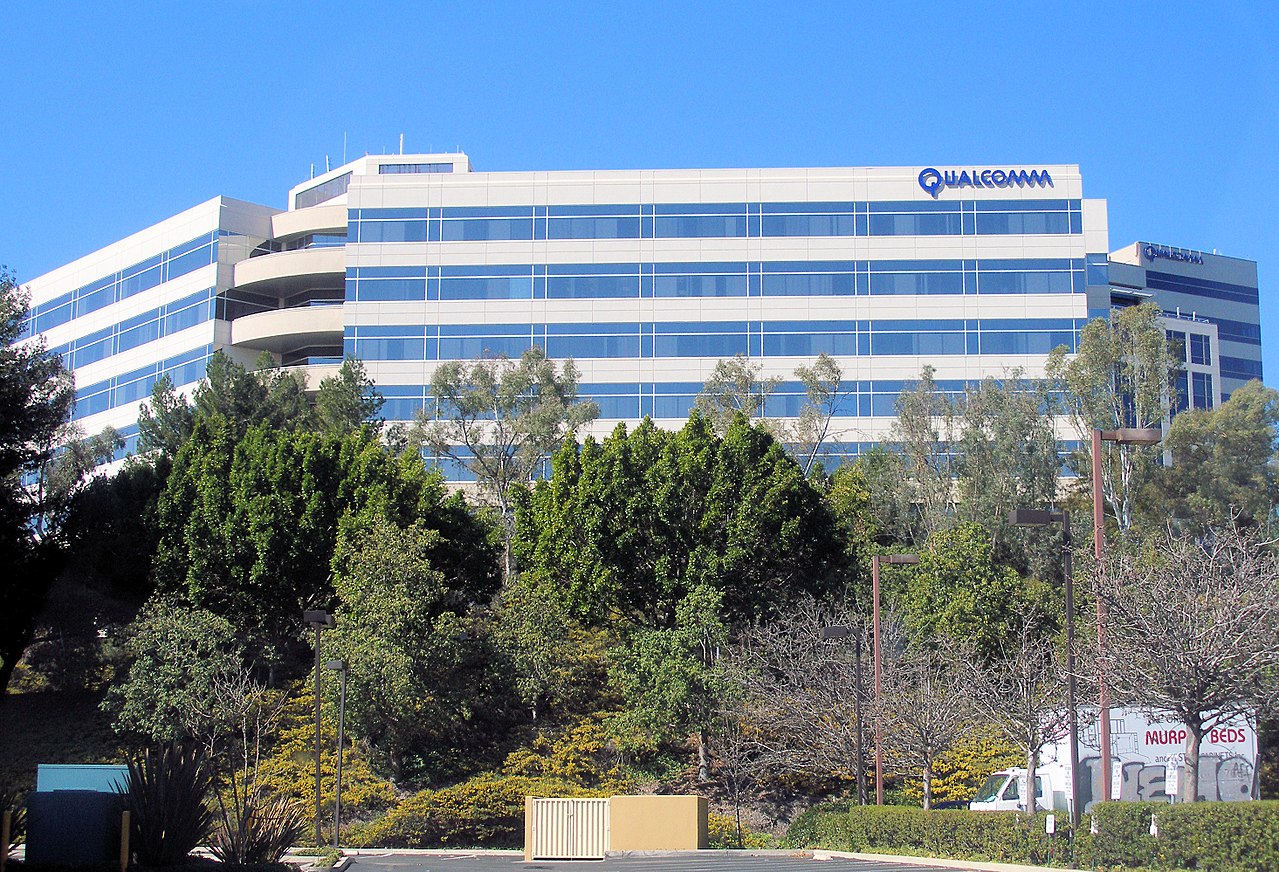
Qualcomm agreed to acquire PickNik Inc., the Boulder, Colorado, company that has stewarded the open-source MoveIt robotics framework since 2015, the companies said Wednesday at the ROSCon conference in Toronto. Neither side disclosed a price.
MoveIt is a motion-planning framework built on the Robot Operating System, or ROS, the open-source stack that underlies much of the world's research and industrial robotics. PickNik founder and chief product officer Dave Coleman said joining Qualcomm would let the company "accelerate that mission, expand investment in MoveIt as a leading AI training platform," according to Qualcomm's announcement. PickNik chief executive Dave Grant said the company looks forward to "building on MoveIt's momentum."
Qualcomm said MoveIt 1 and MoveIt 2 will stay open-source under their existing licenses, with community-driven roadmaps, and that it will keep supporting the framework on hardware from competing vendors. Nakul Duggal, Qualcomm's executive vice president and general manager, said "software is the connective tissue that turns great hardware into great robots."
What PickNik built before Qualcomm showed up
Google was PickNik's first customer, and the company went on to work on the Amazon Picking Challenge and to partner with Motiv Space Systems on a NASA robotics mission, according to The Robot Report. PickNik rebranded its commercial product from MoveIt Studio to MoveIt Pro in 2024 and shipped MoveIt Pro 9.0, adding what the company calls perception-to-motion capabilities for industrial arms.

The deal extends a buildout that started a year ago. Qualcomm bought Arduino on Oct. 7, 2025, gaining a prototyping-hardware line with more than 33 million active users. On Jan. 5, 2026, at CES, it introduced the Dragonwing IQ10 robotics platform, which WebProNews reported was pitched as "directly challenging" Nvidia's Jetson developer platform, the compute line that already runs Agility Robotics' Digit humanoid. Qualcomm said it will integrate MoveIt with Dragonwing hardware and MoveIt Pro with its new Arduino VENTUNO Q boards.
Qualcomm's yearlong run at physical AI
| Date | Move |
|---|---|
| Oct. 7, 2025 | Acquires Arduino, gaining a prototyping-board line with 33 million active users |
| Jan. 5, 2026 | Launches Dragonwing IQ10, pitched against Nvidia's Jetson robotics platform |
| Sept. 23, 2026 | Agrees to acquire PickNik, steward of the MoveIt motion-planning framework |
Qualcomm and PickNik are both founding members of the Open Source Robotics Alliance, the body both companies point to as the venue where MoveIt's roadmap gets decided. That is also the closest thing either side offers to an answer for the question the announcement does not address.
What the announcement does not say
Qualcomm did not say whether it is keeping PickNik's engineers on existing contracts, or how MoveIt's governance changes now that its steward answers to a chipmaker that sells its own robotics silicon. MoveIt has stayed usable across every hardware vendor for a decade in part because PickNik answered to none of them. A pledge to keep supporting "third-party hardware" is a statement of intent, not a governance structure, and neither the release nor PickNik's own posts name a board, foundation seat or contribution process that would survive a change in Qualcomm's strategy.
Investors were unconvinced the deal moves Qualcomm's near-term business. The stock fell 1.2 percent in premarket trading Wednesday, according to TipRanks, which attributed the drop to skepticism that an undisclosed-terms purchase with no disclosed revenue guidance will show up in Qualcomm's next earnings report. The shares remain up 16 percent since Jan. 1.
The transaction is subject to customary closing conditions. Neither company gave a target date, and Qualcomm has not said whether MoveIt's next major version will require Dragonwing hardware to get the fastest support, which is the detail that will show whether "open" survives contact with a chip roadmap. Compute infrastructure for physical AI has become a recurring line item elsewhere on this beat, including Google's deal for half of a Finnish nuclear plant's output and workstation makers selling GPU memory capacity ahead of benchmarks to run the models these robots increasingly carry onboard.
Sources
More in Hardware
- 01Axon's $1.2 Billion Skydio Deal Puts Only $254.9 Million Into Skydio on Day OneThe headline sum is mostly a tender offer for existing holders' shares; the first tranche that closed sends fresh money to the drone maker in a single $254.9 million block.
- 02Agility Robotics Listed With $465 Million, Not the $620 Million Projected in June, After 61.5% RedeemedThe first U.S. pure-play humanoid company trades as AGLT on a $2.5 billion valuation, with $300 million of orders that one outlet says should not be read as booked revenue.
- 03Ornadyne's 1-Pound Flapping Drone Registered as a Bird at Edwards, in a Test With No Published Detection RateThe four-person Y Combinator startup says other companies' sensors could not identify the O1 as a drone on September 17; Ornadyne has not said how many sensors or how many passes.
- 04Ford's 90% Battery Claim Rests on About 2,000 Mach-Es Past 100,000 Miles, and 30 Past 200,000Ford says 36,000 Mustang Mach-Es average 92% battery health, but neither the measurement method nor the data behind the lineup-wide figure has been published.