Ford's 90% Battery Claim Rests on About 2,000 Mach-Es Past 100,000 Miles, and 30 Past 200,000
Hardware / analysis
Ford's 90% Battery Claim Rests on About 2,000 Mach-Es Past 100,000 Miles, and 30 Past 200,000
Ford says 36,000 Mustang Mach-Es average 92% battery health, but neither the measurement method nor the data behind the lineup-wide figure has been published.
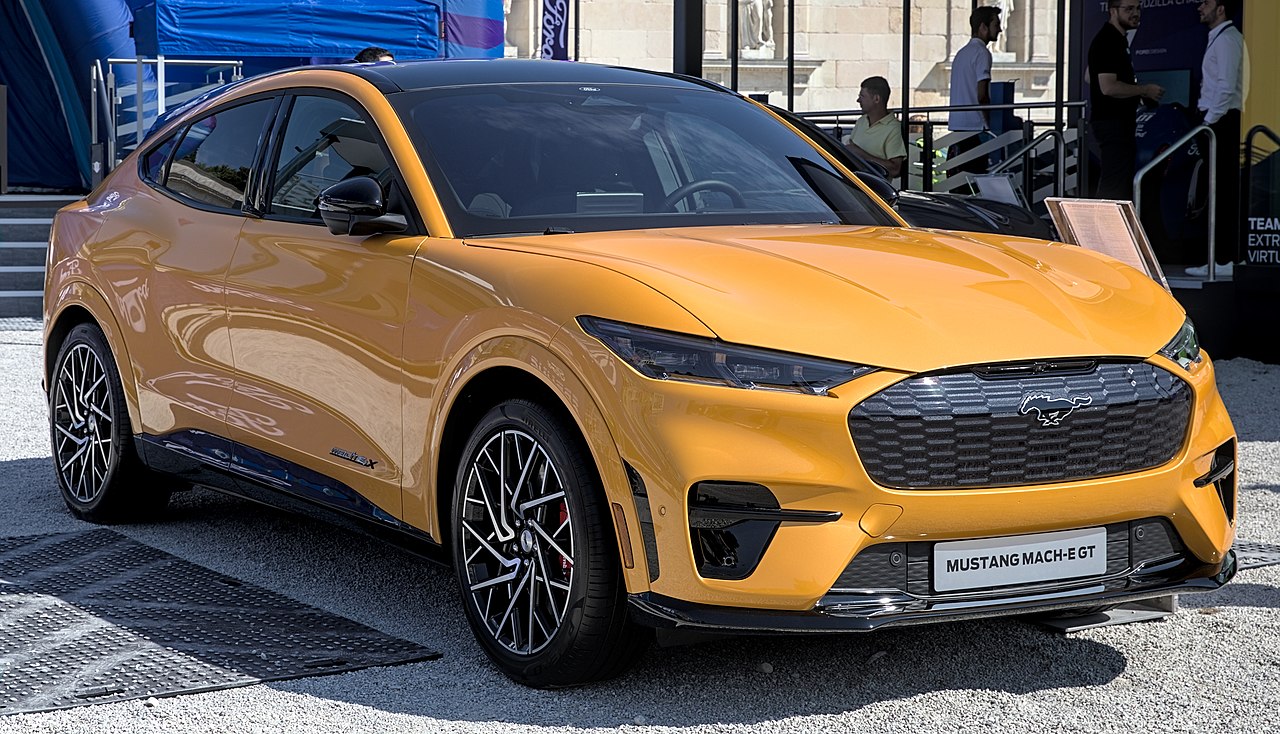
Ford's headline is that its EV battery packs keep more than 90% of their health on average after 100,000 miles, across a lineup that includes the F-150 Lightning and the E-Transit. The evidence it has put on the table is narrower than the headline: one model, one model year, and a high-mileage group that is a small slice of the fleet.
Electrek reported the figures on November 9, and Motor1 carried the same numbers. Both attribute them to Ford. Neither says how Ford measures "health", and neither links a Ford document, so every figure below is Ford-supplied and unverified by a third party.
What Ford reports for the 2021 Mach-E
Ford has data from more than 36,000 vehicles that have driven two billion miles in the United States and Canada since the 2021 Mustang Mach-E launched, according to Electrek. The Mach-E battery averages 92% health over five years, and 95% of vehicles fall between 87% and 97%.
| Group of 2021 Mach-Es | Vehicles | Average health |
|---|---|---|
| All in Ford's data | More than 36,000 | 92% |
| Past 100,000 miles | More than 2,000 | Better than 91% |
| Past 200,000 miles | More than 30 | 88% |

The lineup-wide claim, more than 90% on average at 100,000 miles, is given without a sample. The only group Ford has broken out is the 2021 Mach-E, which uses an NCM (nickel-cobalt-manganese) chemistry. Both outlets note that some newer Ford packs use lithium iron phosphate, and Electrek adds that Ford recommends charging those to 100% from time to time.
The denominator
The number that matters here is the share of the fleet behind each row. More than 2,000 vehicles past 100,000 miles is about 5.6% of 36,000; more than 30 past 200,000 miles is under 0.1%. Those are our calculations from Ford's rounded floors, so the real shares are somewhat higher, but the order of magnitude holds.
Two billion miles across 36,000 vehicles is an average of roughly 55,000 miles each, another figure of ours that assumes the two numbers describe the same fleet. On that reading, the 92% headline is mostly low-mileage packs, and the 100,000-mile claim is carried by the 5.6% tail.
That tail is also not a random sample. A Mach-E that has covered 100,000 miles in five years is probably used for ride-hailing, delivery or long commutes, with heavy DC fast charging, or else its owner drives long distances by choice. Elsewhere in our coverage, the Tesla robotaxi map and Harbinger's Series D also turn on the gap between a headline figure and the count underneath it. Ford has not said how its high-mileage group differs from the rest, or whether packs that were replaced under warranty drop out of the data.
- All vehicles in the data92 % health
- Past 100,000 miles91 % health
- Past 200,000 miles88 % health
- Ford's 100,000-mile design target90 % health
Source: Ford figures as reported by Electrek and Motor1, accessed 2026-11-10; the over-100,000-mile bar is Ford's 'better than 91%' floor
What the slope says, and what it cannot
From the 100,000-mile group to the 200,000-mile group, average health falls about 3 points. That looks gentle, but the two groups are 2,000 and 30 vehicles, and a 30-vehicle average swings with a handful of packs. The 87% to 97% spread across the whole fleet is a 10-point band, wider than the gap between any two of the group averages.
Ford's own design target, per Motor1, is 90% health at 100,000 miles and a life of at least 10 years. The reported data clear that target on average. They do not show how many individual vehicles fall below it, and with 95% of vehicles inside 87% to 97%, up to 5% of the fleet sit outside that band, some of them below it.
The unmeasured part
Battery health as a percentage can mean several things: remaining usable energy measured on a controlled discharge, an estimate from the pack's management software, or a range-based proxy. Ford's figures could be any of these, and the difference between methods can be several points. Neither Electrek nor Motor1 explains which one Ford used, and an owner comparing a dashboard reading with Ford's 92% would be comparing different quantities.
Electrek also notes Ford's care advice, which includes Level 2 charging for daily use, saving DC fast charging for trips and preconditioning in extreme temperatures. Motor1 reports the same guidance and says charging habits affect longevity more than mileage does, which is a reason to read the mileage buckets cautiously.
What would change my read
A published methodology would settle most of it. If Ford released the distribution for each mileage bucket, with the measurement method named, the 5.6% tail could be tested against the other 94%. Data on LFP packs, which Ford now uses in some models, would also matter, because the 90% claim extends to chemistries the sample does not cover. Until then the figure is a company statistic about a five-year-old NCM fleet, and the lineup-wide version of it is unsupported by anything we could read.
Sources
More in Hardware
- 01Axon's $1.2 Billion Skydio Deal Puts Only $254.9 Million Into Skydio on Day OneThe headline sum is mostly a tender offer for existing holders' shares; the first tranche that closed sends fresh money to the drone maker in a single $254.9 million block.
- 02Agility Robotics Listed With $465 Million, Not the $620 Million Projected in June, After 61.5% RedeemedThe first U.S. pure-play humanoid company trades as AGLT on a $2.5 billion valuation, with $300 million of orders that one outlet says should not be read as booked revenue.
- 03Ornadyne's 1-Pound Flapping Drone Registered as a Bird at Edwards, in a Test With No Published Detection RateThe four-person Y Combinator startup says other companies' sensors could not identify the O1 as a drone on September 17; Ornadyne has not said how many sensors or how many passes.
- 04Tesla's San Antonio Robotaxi Map Is 274 Square Miles on Paper, Probably 160 to 210 BookableThe advertised zone is four times Waymo's, but independent tests in six other cities found Tesla's apps accept pickups in 59% to 78% of the polygon.