Qualcomm Licenses Huawei's LogicFolding Patents in Multiyear Cross-License
Hardware / news
Qualcomm Licenses Huawei's LogicFolding Patents in Multiyear Cross-License
Huawei says its patent licensing contracts will exceed $6.9 billion after the deal, but neither company has disclosed what Qualcomm is paying.

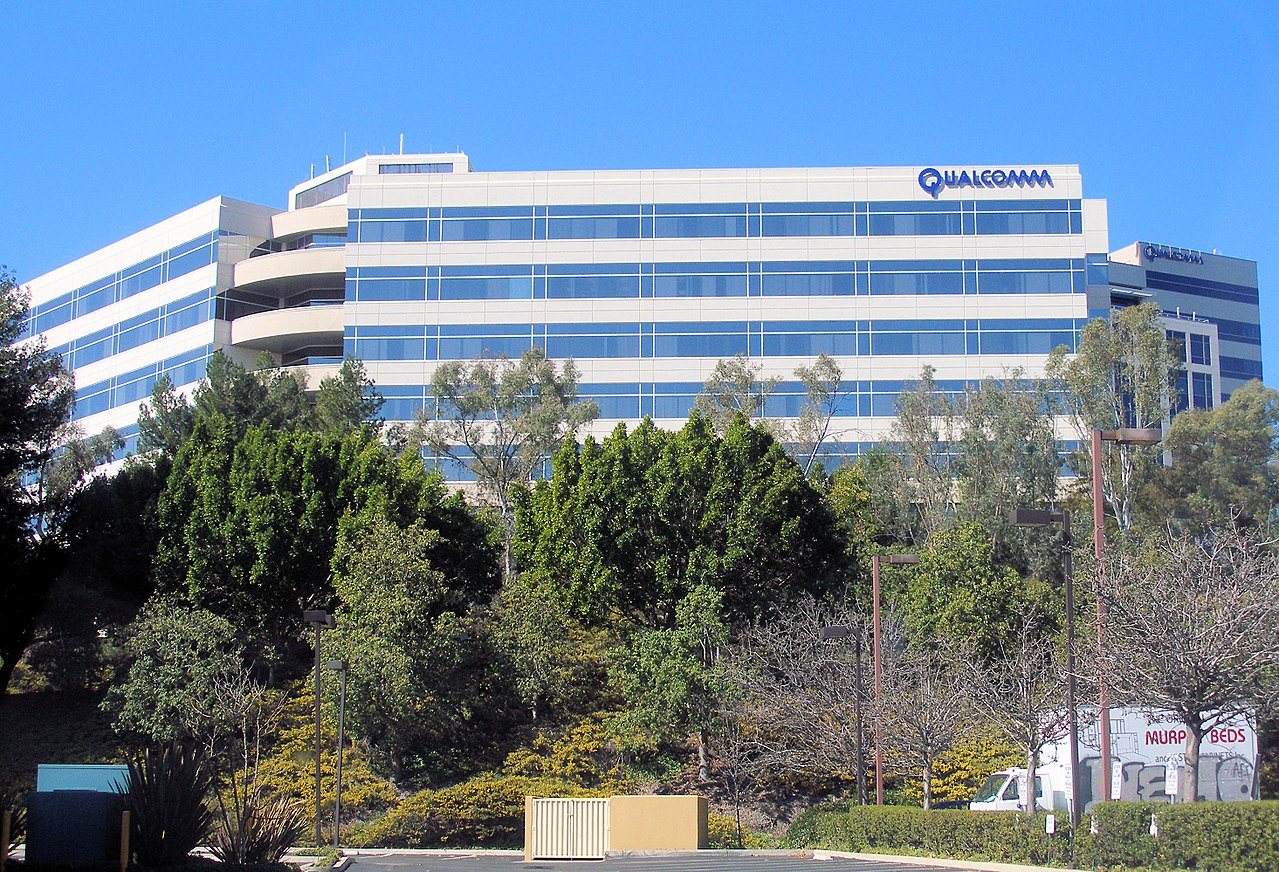
Qualcomm has licensed the patents behind Huawei's LogicFolding chipmaking technique under a multiyear cross-license, Bloomberg reported on Oct. 5. A Huawei spokesperson confirmed the arrangement and said the company expects the total value of its patent licensing agreements to exceed $6.9 billion once the Qualcomm deal is counted, per Bloomberg's report as carried by Yahoo Finance.
The value of the Qualcomm agreement itself was not disclosed. The deal covers 5G devices, AI services, near- and co-packaged optics and networks, and it is subject to review by the U.S. Federal Trade Commission under the Hart-Scott-Rodino Act, which applies to deals worth more than $133.9 million, Bloomberg wrote.
What LogicFolding is
LogicFolding stacks two full wafers face to face using 3D wafer-to-wafer hybrid bonding, with an interconnect pitch of 1.5 microns, according to Techjuice. Rather than shrinking transistors, it shortens the distance signals travel between blocks of a chip. Huawei calls the underlying idea the "Tau Scaling Law."
He Tingbo, Huawei's semiconductor chief, first presented the technique at the International Symposium on Circuits and Systems in Shanghai on May 27, 2026, per Techjuice. Huawei built it as a workaround: the chips use SMIC's N+3 process on older deep ultraviolet lithography, because U.S. restrictions block access to extreme ultraviolet machines from ASML.
The claims are Huawei's
Every performance figure in circulation comes from Huawei. Techjuice reports a 55 percent increase in transistor density, a 41 percent improvement in power efficiency and a target of 295 million transistors per square millimetre, a figure it compares with TSMC's 14A node. The first commercial part, the Kirin 2026, is said to run at 3.1 GHz on 0.9 volts, with a 38 percent GPU gain and a 140 percent NPU gain over a 2025 baseline.
Those are vendor-supplied numbers. Neither source names an independent party that has measured them, and the baselines (which 2025 chip, which workload) are not given.
- NPU vs 2025 baseline140 %
- Transistor density55 %
- Power efficiency41 %
- GPU vs 2025 baseline38 %
Source: Techjuice, relaying Huawei claims, accessed 2026-10-06
| Item | Detail | Source |
|---|---|---|
| Bonding pitch | 1.5 microns | Techjuice |
| Process | SMIC N+3, DUV | Techjuice |
| Deal value | Not disclosed | Bloomberg |
| Huawei licensing total | Above $6.9 billion | Bloomberg |
Why a U.S. chip designer wants the patents
The interesting question is why Qualcomm, a licensor of its own patents, wants a license in the other direction. Bloomberg describes LogicFolding as a path to narrow the gap with TSMC without the most advanced lithography. Packaging and stacking techniques are not transistors; they sit in the part of the supply chain where Qualcomm designs products but does not manufacture them.
It is a cross-license, so Qualcomm is also licensing something to Huawei. Neither report says what. Cross-licenses commonly net out against each other, which would explain why no price was disclosed, but that is an inference and not something either company said.
Silicon that is not leading-edge has other uses, too. A Qwen3.5-9B FPGA running at 1,525.8 tokens a second shows how far architecture can substitute for process node, and Micron's committed 2027 memory output shows where the other constraint sits.
What would change this read is the FTC filing. If the review period opens, the agreement's scope will become visible; if it does not, the claim that the deal clears the $133.9 million threshold stays Bloomberg's estimate. Neither company has given a date for products using the technique to reach customers.
Sources
More in Hardware
- 01Teradyne Takes an Undisclosed Stake in Bright Machines to Put Robots on AI Server LinesThe Oct. 5 announcement gives no dollar figure and no ownership share, and says the companies will only "evaluate" integrating Teradyne's robots and board testers.
- 02Starship Reaches Orbit on Flight 14 and Deploys 26 Starlink V3 Satellites, Then Splashes Down EarlyAn engine failure after stage separation cut the planned nine-hour mission to about three, and ship reuse remains undemonstrated.
- 03Norway Wants a Temporary Ban on Smart Glasses in Parks, Gyms and SchoolsDigitalisation minister Torgeir Micaelsen has not yet named the devices or the bill's text, and his Labour government needs other parties' votes to pass it.
- 04Lucid Built 2,954 Cars in Q3 and Sold 3,806, Draining Its LotProduction fell 38 percent from the second quarter as Lucid works off a $1.38 billion inventory pile with no 2026 volume target left.