Jabil Says Humanoids Are Entering a Phase of Tens of Thousands, but Names No Customer and Gives No Count
Hardware / analysis
Jabil Says Humanoids Are Entering a Phase of Tens of Thousands, but Names No Customer and Gives No Count
The contract manufacturer that builds Apptronik's Apollo described the volume ramp, the compute cost and the safety gap on October 8. The numbers behind the claim are not in the article.
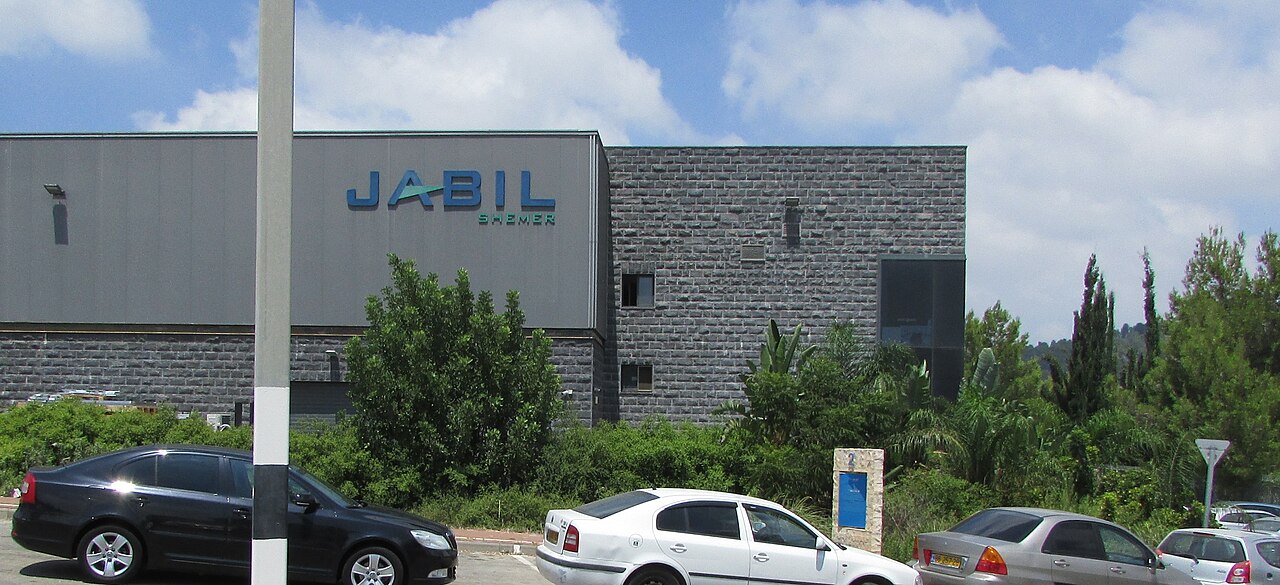
Jabil, the St. Petersburg, Florida, contract manufacturer, says humanoid robots are moving into "a phase of tens of thousands" of units, away from hand assembly on site. The company supplied no unit count, no price and no customer name to support that, which makes it a volume forecast with an empty denominator.
Thomas Brown, Jabil's senior director for engineering and technology, made the case to Eugene Demaitre of The Robot Report on October 8, 2026. Brown said many customers have built humanoids in low volumes so far, and that expensive robots limit how many can be built for AI training data and customer validation. Jabil says it can help cut design cost, manufacturability and quality risk to reach the larger scale.

What Jabil said and what it did not
The article names Tesla, 1X Technologies, XPeng and UBTECH as companies preparing production ramps, and Hyundai, Tesla and BMW as companies funding or testing humanoids. Those are the article's lists, not Jabil's customer list. Brown said Jabil works with major U.S. and overseas humanoid developers but cannot name them.
| Claim | Figure given | Gap |
|---|---|---|
| Production phase | "Tens of thousands" | No unit count per maker, no date |
| Consumer humanoids | "Maybe in five-ish years. It could be 20 years" | A fourfold range |
| Machine-tender speed | 1.5 m/s (3.3 mph) | A benchmark for traditional automation, not for humanoids |
| Compute | NVIDIA Jetson is popular among customers | No module, no price |
The number that matters is the one missing from that table: units per year per maker. Whether "tens of thousands" is a total across the industry or a figure per maker, a year or a cumulative run, the article does not say. It gives no unit counts for individual companies, so the gap cannot be closed from this source.
Compute is the line item Brown flagged
Brown said current compute handles many demonstration behaviors but that edge computing needs to grow, and that prices are an ongoing pain point for scale. NVIDIA's Jetson is a popular platform among Jabil's customers, he said. The article names the platform but no module, no price and no volume discount.
The wiring is a second constraint. Brown said harnesses need automotive-grade robustness in the small form factor of consumer electronics, and that power supplies should be swappable so developers can iterate quickly. These are manufacturing details, and they are why a contract manufacturer wants to be involved before a design freezes rather than after.
The case against humanoids, from the manufacturer
Brown did not argue that humanoids replace everything. Wheeled bases solve an easier problem than bipedal designs, he said, and mobile arms still make sense. Fast, traditional automation will keep a major role for the foreseeable future, and he said a machine tender moving at 1.5 m/s (3.3 mph) is already fast. That is the speed humanoids have to justify themselves against on a line that exists today.
His consumer estimate is the widest range in the piece: "Maybe in five-ish years. It could be 20 years." Manufacturing is the nearer fit, he said, because one humanoid can handle many tasks where a purpose-built line handles one. If fleets of them make lines reconfigurable through software, in his words, "The lines are no longer the key limiting factor."
Safety is the part he said is unsettled. Humanoids need new certification methods, failure-mode analysis and standards, and existing arm standards on standoff distances and guarding will need to be expanded.
Supply chains and use cases
Brown said companies are resetting and diversifying their supply chains, which is the part of the article that touches where parts come from. He also said consumer use cases are still vague, so the volume Jabil describes is, on his own account, a factory-floor volume: one robot standing in for several single-purpose stations, bought by manufacturers rather than households.
That is a narrower market than a consumer humanoid implies, and it is the one where a buyer can at least run a payback calculation, provided the robot's price and uptime are known. Neither is in the article.
The one named partnership
Jabil's only disclosed humanoid deal is with Apptronik. Robotics247 reported on February 25, 2025 that Jabil would build the Apollo humanoid on its production lines and pilot Apollo units in its own operations for inspection, sorting, kitting, material handling and sub-assembly. Rafael Renno, Jabil's senior vice president of global business units, said piloting Apollo is "a logical next step for our division and for Jabil in the long term." Jeff Cardenas, Apptronik's co-founder and chief executive, said the goal is to "build them rapidly at scale, at the right price point." That article gave no production figures either.
For related robotics coverage, see the new chief executive at Boston Dynamics and AWS's Physical AI Toolchain.
What would change this reading
A named customer with a dated purchase order would turn "tens of thousands" into a forecast with a buyer. Until then it is a manufacturer's estimate of demand it also hopes to serve. The first checkpoint is the one Brown pointed at himself: the price of the compute module, since a humanoid that cannot hit a unit cost cannot reach the volume the forecast assumes.
Sources
More in Hardware
- 01Germany Backs Tesla's EU Approval If the System Is Renamed and Capped at 10% Over the LimitBerlin's deal replaces a 50% offset with 10% and drops the Full Self-Driving name, but the EU vote has slipped to December.
- 02Helm.ai Says It Signed $70 Million in 12 Months, but Only Honda Is Named in Its Paper TrailThe figure is unattributed and may not be revenue; the one documented customer plans cars around 2027.
- 03BYD's Larger Seagull Takes Pre-Orders With a 95 kW Motor and No Price, Battery or RangeThe second-generation car is 425 mm longer than the $10,000 original; what BYD has published comes from a ministry filing, not from BYD.
- 04AWS's Physical AI Toolchain Costs $79 to Fine-Tune GR00T, but Its Edge Deployment Stage Is Still Marked PlannedThe README prices each stage by instance and hour, and lists one of the launch's five stages as not yet built.