REA Hits 15.7k Stars as an MCP Toolkit That Lets AI Agents Reverse-Engineer Software
Software / analysis
REA Hits 15.7k Stars as an MCP Toolkit That Lets AI Agents Reverse-Engineer Software
The MIT-licensed project wraps Ghidra, Hopper and IDA in 134 agent tools, and its own README says process capture is not a sandbox.

REA, an open-source server that gives AI agents 134 reverse-engineering tools, had 15.7k GitHub stars on October 8, 2026. Its README pitches it with one line: "Reverse engineer anything with agents, from app behavior down to native binaries."
The repository belongs to a GitHub account called morluto, which names no individual author on the page. It is MIT-licensed, has 1,320 commits, 1.6k forks and 79 open issues, and pins its own install command to [email protected]. Stars measure attention, not adoption, and nothing on the page says how many people run it.
What REA does, tool family by tool family
REA is a server for the Model Context Protocol, the open standard for connecting AI applications to external systems. An agent such as Claude Code, Codex, Cursor or Gemini CLI connects to it and gets a menu of reverse-engineering actions: disassemble this function, unpack this Electron bundle, record what this process touches.
The README never prints a total. Its "Tool catalog for investigation" table lists tools by family, and those add up to 134 by our arithmetic. The largest family is native inspection, which wraps disassemblers the user has to supply.
- Native inspection41 tools
- Workspace and observation21 tools
- Investigation workflows14 tools
- Application workflows13 tools
- Browser observation12 tools
- Managed PE/CLI7 tools
- Native macOS utilities7 tools
Source: morluto/rea README, accessed 2026-10-08
The remaining families are the artifact graph (5), Android APK (5), Electron analysis (5), firmware (2) and JavaScript runtime (2).
The engine underneath is somebody else's
REA does not decompile anything itself. For native code it drives Ghidra, Hopper or IDA, and the README says Ghidra and IDA are bring-your-own providers that REA does not install. Hopper is separate software with its own licence and demo limits.
Ghidra is the NSA Research Directorate's software reverse engineering framework, Apache-2.0 licensed, with 81.4k stars on its own repository. That makes the arithmetic plain: the reasoning about a binary comes from the model, and the disassembly comes from tools that were already free or already paid for.
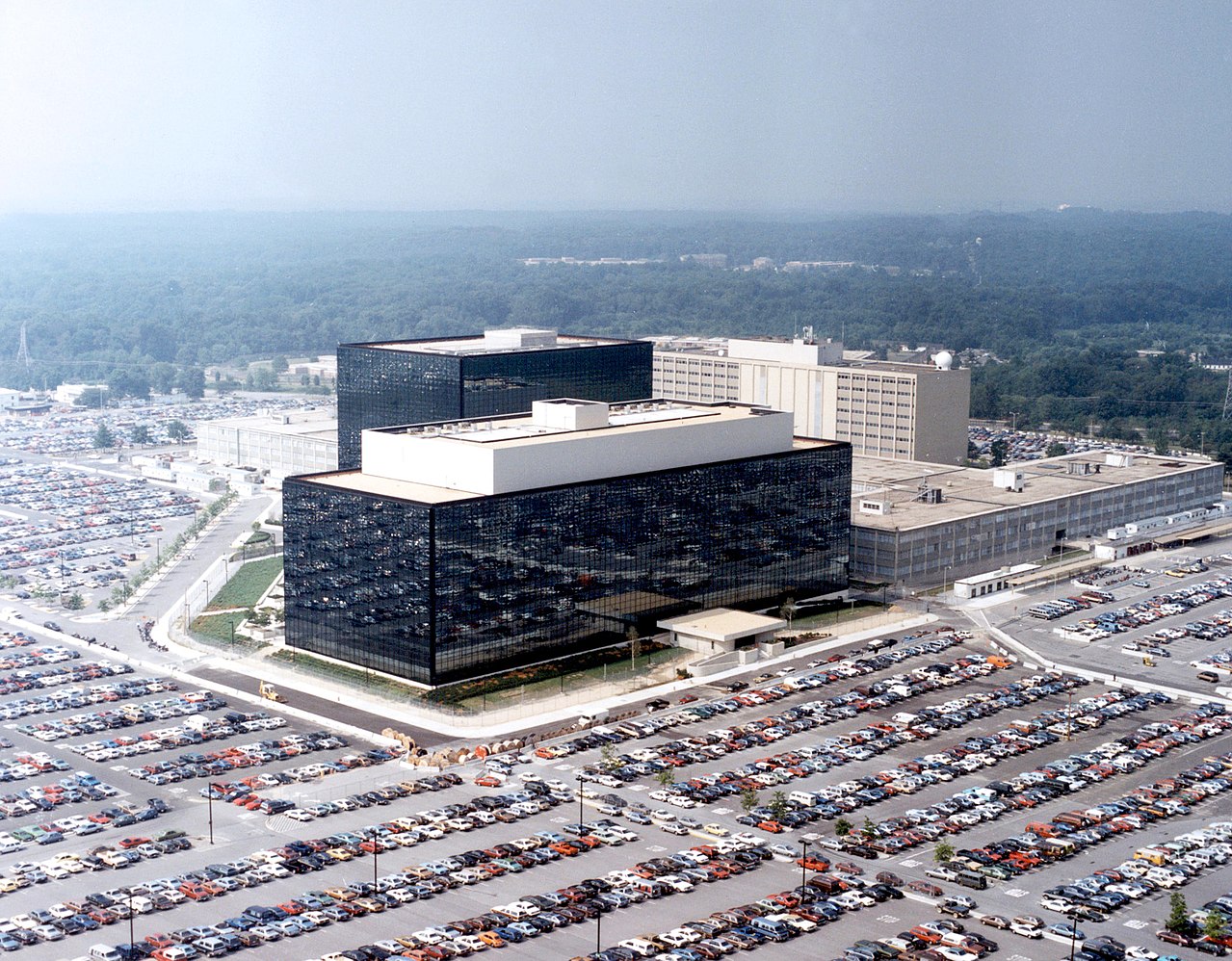
The practical consequence for a reader deciding whether to install it: REA saves the typing, not the licence fees. The setup wizard, run with npx rea-agents setup, edits agent configuration. The README says it shows the changes first and backs up the existing config.
What the project shows, and what it concedes
The README's demo project traces the executable of DX-Ball, a classic Windows game, back to maintainable C in a separate repository by a third party. The README marks it "(in progress)". The README quotes a sound-pan investigation that "passes 3,205 original-x86 cases and reproduces all 63 compiled function bytes." Those figures describe one function in one project REA does not control, and we did not check them.
The README is blunter about limits than most. It says the project "does not claim to recover original source code." Native Windows Process Capture is unavailable, and Windows Ghidra support is described as experimental. The security section says "Process Capture records behavior and is not a security sandbox", so a target the agent launches runs with the user's permissions.
Read that last sentence as the sticking point. An agent that is told to observe an unknown executable will start it on the machine you gave it.
The disclaimer section is three sentences: the tools are for "lawful reverse-engineering research, analysis, and reconstruction", users are responsible for authorization, and the project "does not endorse illegal or unauthorized use." The README's own demo is reconstruction of a shipped game, which is why the authorization line matters. For a different route to a similar goal, see our earlier piece on a Rust reimplementation of Photoshop.
Three days of issues, 25 read
The first page of the issue tracker lists 25 of the 79 open issues, all opened between October 6 and October 8. Six carry a bug label. Four of those filed on October 8, #1038 to #1041, concern how REA resolves URLs, HTML script references and package exports. #1040 is titled "Invalid package exports targets can resolve outside their package." No issue on the page has a security label, and whether that one is exploitable is an inference the tracker does not support.
Two reports show where agents meet real software. Issue #746 describes zero output for minutes, then a generic failure, on a 24 MB Electron archive from Obsidian 1.12.7. Issue #919 says REA's tool schemas exceed the function-calling limits of Muse Spark 1.3, with recursive references and nesting deeper than 10 levels, so no REA tool works with that model.
The most discussed thread, #740 with 20 comments, is a roadmap proposal to modularise how REA integrates outside tools. The roadmap items queued behind it name Frida, pwntools, pwndbg, WABT and EVM bytecode analysis.
The number to watch is the open-issue count, which stood at 79 on the day the repository showed 15.7k stars. Our other piece on agent tooling, Cloudflare's security-audit skill, covers a project in the same trending list.
Sources
More in Software
- 01God of War: Chains of Olympus Runs in a Browser Through Recompilation, Not EmulationThe psp-web-recomp repository translates PSP executables to WebAssembly and reports 60 fps, but only two games from one studio work.
- 02Margaret Hamilton, Who Led Apollo's Flight Software Team, Dies at 90MIT says her team's priority-driven design let the Apollo 11 landing proceed through a 1202 alarm; the code she signed off in 1969 is on GitHub.
- 03docker agent Runs YAML-Defined AI Agents From Any OCI Registry. Its README Says Nothing on SandboxingDocker Engineering's Apache-2.0 plugin ships pre-installed in Docker Desktop 4.63, but the repository shows no tagged release and a telemetry notice.
- 04PhotoCraft, a Rust Photoshop Clone With 14,600 Stars, Round-Trips 307 of 309 PSD Test FilesThe ArtCraft Team's MIT or Apache-2.0 editor calls itself early alpha and says it is not yet a replacement for daily professional work.