China's Robot Makers Slip to 55% Market Share at Home
Hardware / analysis
China's Robot Makers Slip to 55% Market Share at Home
Foreign robot makers grew installations inside China 27 percent in 2025, faster than domestic suppliers, even as the world's operating stock of industrial robots passed 5 million, the International Federation of Robotics reported.
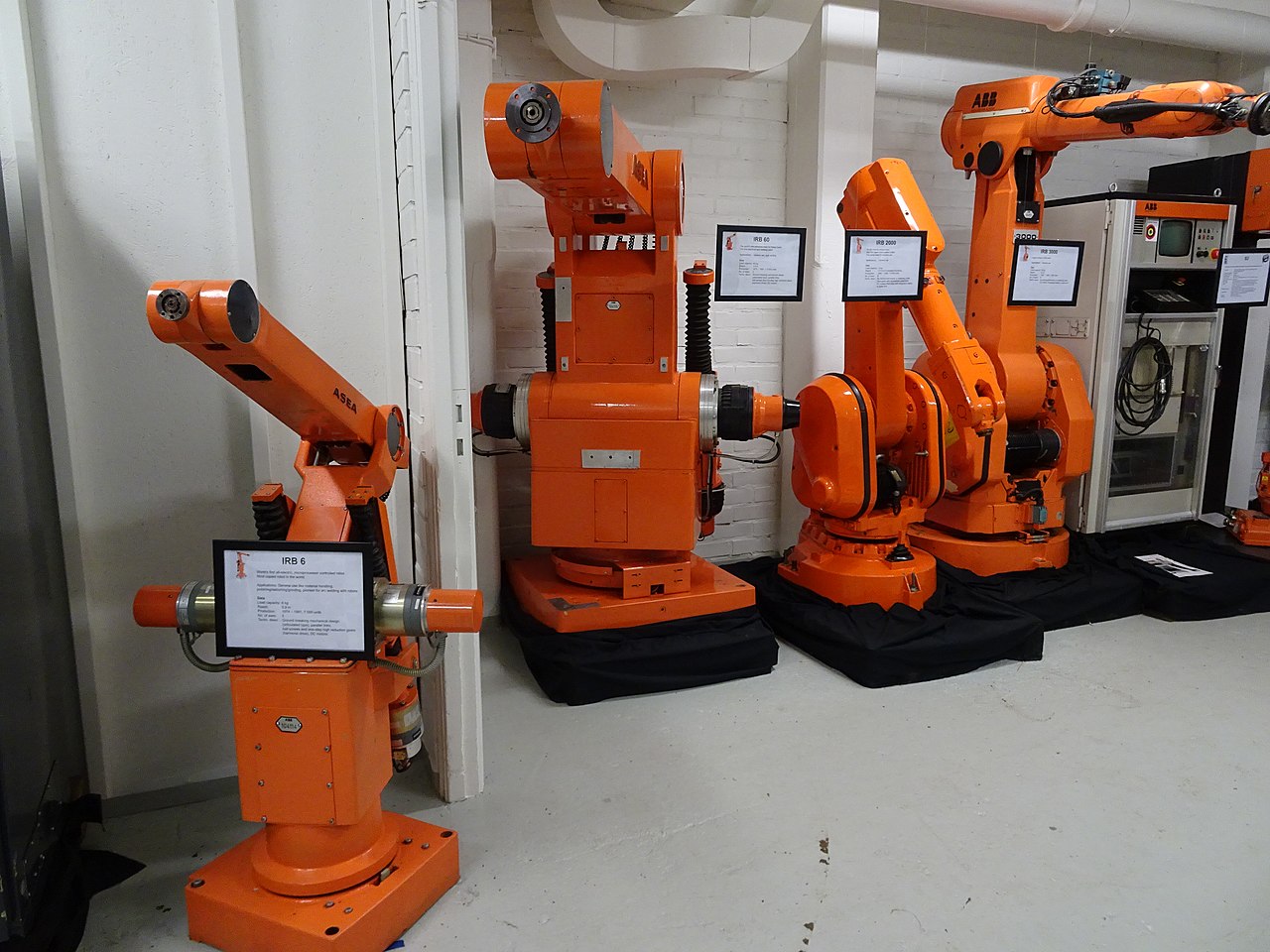
China's domestic robot manufacturers installed 195,000 industrial robots in their home market in 2025, up 15 percent from the year before. That sounds like the story: Chinese-made robots gaining ground against imports. It is not. Foreign suppliers grew their installations inside China by 27 percent over the same year, according to the International Federation of Robotics' World Robotics 2026 report, released Sept. 24. Growing faster than a rival that is also growing is still losing ground, and domestic manufacturers' share of their own market slipped to 55 percent, down from roughly 57 percent the year before, The Robot Report's reading of the same data found.
Zoom out five years and the direction reverses. Domestic Chinese robot makers held roughly 30 percent of their home market in 2020, according to a separate tally of IFR's figures published by Tech Times. A climb from 30 percent to a peak near 57 percent in 2024, followed by a two-point slip in 2025, is not decline. It is a five-year rise that paused for one year while global demand for robots outran what any single country's suppliers, foreign or domestic, could build. China installed 354,000 robots in total in 2025, up 20 percent, or almost three of every five machines installed anywhere in the world.
The US passed Japan; Europe kept sliding
Outside China, the same pattern shows up in the rankings. The United States installed almost 38,500 robots in 2025, up 12 percent, enough to pass Japan and become the world's second-largest market. Japan's installations fell 19 percent to 36,219 units, dropping it to third. South Korea, in fourth place, was close to flat at 30,000 units, down 1 percent.
Germany, the European Union's largest buyer at 41 percent of the bloc's installations, fell 8 percent to 25,000 units. Italy, France and Spain installed 7,800, 4,500 and 4,300 units, and all three declined. India installed 10,500 units, up 15 percent, which IFR says amounts to a 27 percent compound annual growth rate since 2020, off a base small enough that the percentage overstates the volume. Brazil's installations rose 38 percent, and its automotive sector alone jumped 212 percent, which IFR credits to Chinese automakers building out local plants rather than to any change inside Brazil.
The world crossed 5 million robots in 2025
Worldwide, the operating stock of industrial robots passed 5 million units in 2025, up 9 percent and more than double the count from seven years earlier. Annual installations topped 600,000, up 11 percent, and IFR is forecasting 655,000 new installations in 2026 and 806,000 by 2029. "Industrial automation is progressing at high speed," IFR President Jane Heffner said. "The strongest growth is taking place in Asia, followed by Americas. Europe is moving ahead more slowly."
| Country | 2025 installations | Change from 2024 |
|---|---|---|
| China | 354,000 | +20% |
| United States | 38,500 | +12% |
| Japan | 36,219 | -19% |
| South Korea | 30,000 | -1% |
| Germany | 25,000 | -8% |
| India | 10,500 | +15% |
Heffner's report credits three forces for the acceleration: labor shortages that IFR projects will leave 2 million manufacturing jobs unfilled by 2030, cheaper integration as programming tools improve, and advances in machine vision and sensing that let a robot work beside a person instead of behind a cage. That last force runs on the same generation of AI systems whose oversight OpenAI's Sam Altman and Anthropic's Dario Amodei told the United Nations Security Council in September was moving faster than any government could regulate. A robot arm that can see a person coming is a smaller, quieter version of that same claim.

What the report leaves out
IFR does not say what share of China's 195,000 domestically made robots were exported rather than sold at home, which is the number that would settle whether Chinese manufacturers are losing their own market or simply shipping more of their output abroad. It also does not publish an average price per unit, so there is no way to tell from this report alone whether foreign suppliers gained ground in China by underpricing local rivals or by winning orders domestic factories could not fill fast enough.
The report is also silent on what happens to the controllers running all 5 million of these machines once they are networked, which is now the default rather than the exception on a modern line. CISA's September advisory listing 14 unresolved flaws in Botslab dashcams, with no fix in sight, concerned consumer hardware, but it is the same category of exposure an integrator now inherits with every networked robot arm added to a factory floor.
What would change this read: if next year's World Robotics report shows China's domestic share climbing back above 57 percent, the 2025 dip was a one-year wobble against unusually strong global demand. If the decline continues instead, the more interesting story stops being how many robots China buys and becomes who is left building them.
- China354K units
- United States39K units
- Japan36K units
- South Korea30K units
- Germany25K units
- India11K units
Source: International Federation of Robotics, World Robotics 2026 report, accessed 2026-09-26
Sources
More in Hardware
- 01Waymo's Robotaxi Growth Is Capped by the Grid, Not SoftwareWaymo's fleet grew from three U.S. cities to 15 in two years, but an infrastructure specialist says building a new substation connection can take 8.9 years.
- 02Agility's Digit 5 Builds on a Passed OSHA Safety TestThe humanoid robot ships in early 2027 with a 50-pound payload and a 10-to-1 run-to-charge ratio, after an earlier Digit logged 65,000 working hours at a GXO warehouse.
- 03Tesla Patent Shows Roadster Wing With 700 kg of DownforceThe filing describes a wing that hides flush in the bodywork and deploys in under three seconds, a week before Tesla's Oct. 1 event.
- 04Moog Finishes a Clean Room Built to Cut Thruster Lead TimesThe Niagara Falls expansion adds more than 80 percent more certified space a year after Moog broke ground, timed to defense and satellite propulsion demand.