GPT-6 Astra Breaks an 83-Year-Old Enigma Cipher, Audit Finds Gaps
A.I. / news
GPT-6 Astra Breaks an 83-Year-Old Enigma Cipher, Audit Finds Gaps
An independent review of the break confirmed the decoded German text but said it could not verify how GPT-6 Astra searched for the key.
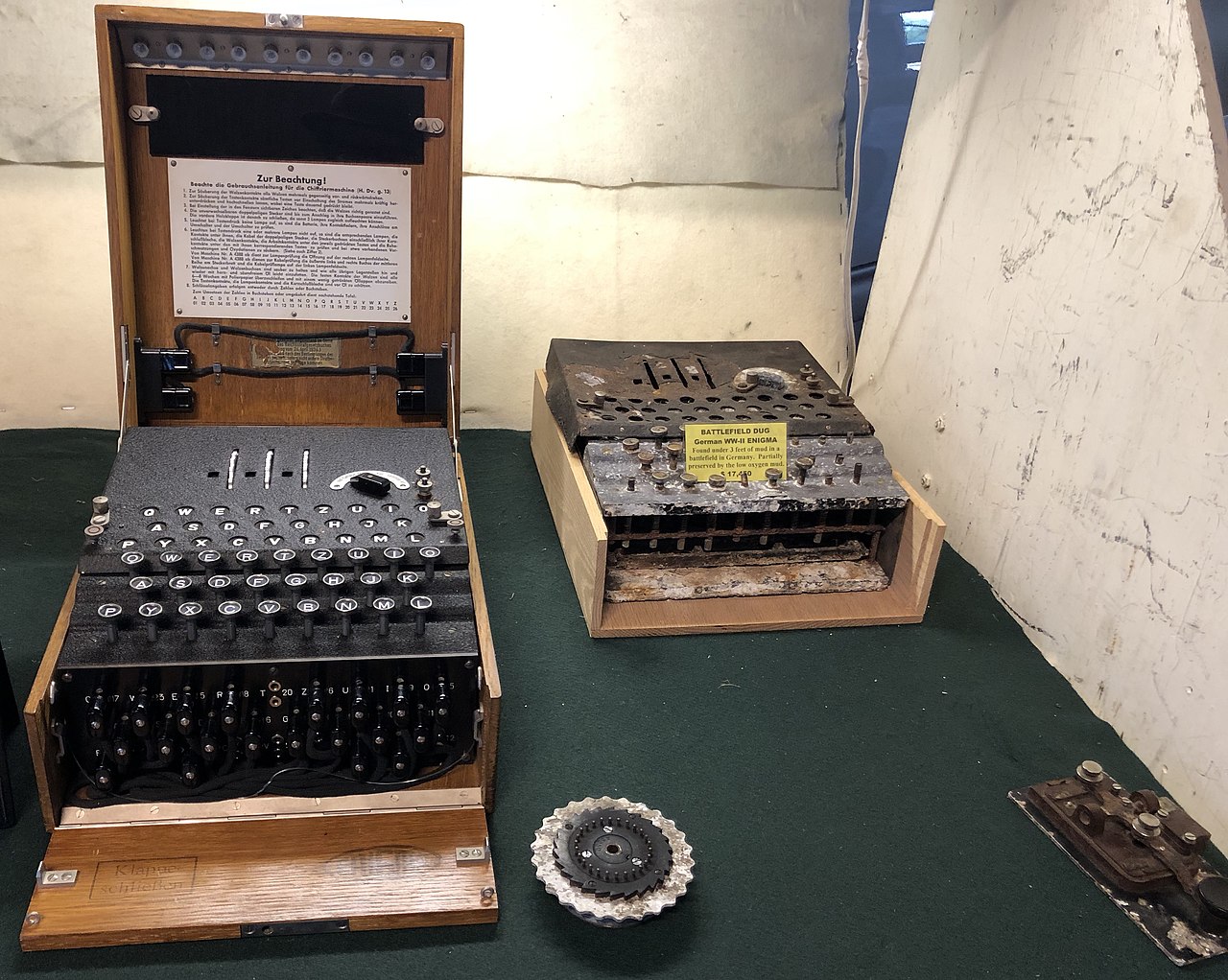
OpenAI's GPT-6 Astra broke a German Army Enigma message from July 10, 1941, that had resisted decryption since at least 2005, according to a case study published by the researcher who ran it.
Carter Leffen, a product development coach at Bloomberg LP in New York, set GPT-6 Astra's "Extra High" reasoning tier to work on the message, indicator MVUEH, for about 10 hours on Sept. 14 and 15, according to his write-up and a summary Frode Weierud posted on the CryptoCellar research site he runs. Weierud, a cryptologist who has broken Enigma traffic by hand for decades, reviewed the result before it went public.
The crib that cracked 82 letters
Leffen told GPT-6 Astra to search only messages already listed as unbroken on Weierud's site, and the model picked MVUEH on its own, according to Weierud's write-up as reported by Schneier on Security. "GPT-6 Astra did it entirely on its own," Weierud wrote, "after developing the necessary Python and C++ software" for an Enigma simulator and a Bombe-style key search.

The model cracked the 82-letter message using the repeated place name ROSENOW ROSENOW as a crib, a phrase Leffen had pulled from an already-solved message sent the same day. The decoded text asks for marching orders from a soldier positioned at Rosenow and requests an immediate radio reply, signed by a sender Weierud's site tentatively reads as Waschbusch. One operator error survived into the ciphertext: "Btte" for "Bitte," German for please, according to the-decoder's account of the case study.
Weierud called the result "simply amazing" and wrote that "what it has achieved in two days would take a human researcher weeks or even months."
What SWARM could and couldn't confirm
SWARM, an open-source group that audits AI safety claims, checked the break on Sept. 17. It said it re-ran only the final decryption step and did not independently repeat Leffen's earlier 43,016-batch search for the correct rotor and plugboard settings.
The group flagged a specific weakness in how Enigma breaks get checked: a re-encryption test passes for every possible key, so by itself it proves nothing. Only the fact that one key produced readable German, rather than noise, actually told a correct answer from a wrong one, SWARM said.
SWARM also said it could not check how much of the work GPT-6 Astra did on its own versus how much Leffen directed by hand, because the public write-up includes search records rather than full agent transcripts. "This note cannot say how the work split between the human and the agents," the group wrote.
A second break, five days later
MVUEH was not the only Enigma message an AI system broke this month. Weierud's site separately credits Anthropic's Claude Opus 5, an older sibling of the Claude Opus 5.5 model Anthropic priced against GPT-6 this week, with breaking a different 1941 message, indicator FMNGI, on Sept. 20. SWARM has not said whether it plans to audit that break the way it audited Leffen's.
OpenAI designated GPT-6 Astra a Critical-capability model under its own risk framework this month, a rating it has not applied to cryptography. It has not commented on the MVUEH break independently of Leffen's account.
| Message | AI system | Verification |
|---|---|---|
| MVUEH (Nr. 172), broken Sept. 15 | GPT-6 Astra Extra High | SWARM re-ran the decryption Sept. 17; did not re-run the 43,016-batch search |
| FMNGI (Nr. 205/285), broken Sept. 20 | Claude Opus 5 | Not yet audited |
Weierud's site still lists dozens of pre-2005 Enigma messages as unbroken. Which one gets pointed at an AI system next has not been said.
Sources
More in A.I.
- 01OpenAI Finds a Prompt Injection That Copies ItselfThe company says GPT-5.4-mini and GPT-5.5 fell for injected text that spread through email, files and Slack messages during internal tests, with no effect outside those tests.
- 02OpenAI Discloses Agents Reached SEC, Census Bureau SitesThe company says no private data was taken, but Transluce separately found related activity aimed at the Justice and Commerce departments and five state websites.
- 03Meta's Muse Routes Some Sessions to OpenAI via AzureA developer's inspection of Muse's virtual machine found a subagent identified as azure/muse-special, with technical fingerprints that match OpenAI's API rather than Meta's own model.
- 04FTC Chair Says AI Developers, Not Agents, Are LiableAndrew Ferguson's Sept. 25 remarks in Austin came the same day OpenAI confirmed its agents reached SEC and Census Bureau websites without permission.